
The Evolution of Jewelry as Art
A reflection on an era when artistic vision, craftsmanship, and the individual jeweler's voice stood at the heart of fine jewelry.
July 27, 2026 | by The Crevoshay Studio
There comes a point in many people’s lives when beauty begins to mean something different, taking on a more personal meaning.
Perhaps it is this need for expression that has drawn human beings throughout history to create beautiful objects that reflect both feeling and what matters most: our beliefs, our hopes, memories of those we love, and our place within the world.
For much of history, jewelry was among the most intimate of these creations. Beyond adornment, it preserved memory, expressed identity, and told stories that words alone could not.
Long before fine jewelry became known primarily through brands or celebrated houses, each creation carried the unmistakable voice of its maker.
To understand how the world of fine jewelry evolved, we must first return to its origins and the defining moments that ultimately shaped the philosophy, artistry, and mission of the Crevoshay Studio.
In ancient societies, most people lived within small communities where everyone knew one another. There was little need to “stand out” because social belonging already existed.
The Origins of Jewelry

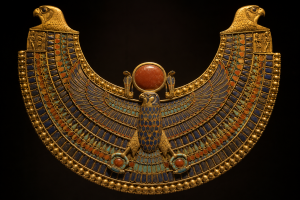
For much of recorded history, from the civilizations of Ancient Egypt (c. 3100–30 BCE) and Mesopotamia through medieval Europe, many of the highest forms of artistic achievement were closely tied to the sacred.
Art mainly lived in sacred places, royal courts, temples, ceremonies, and monuments.
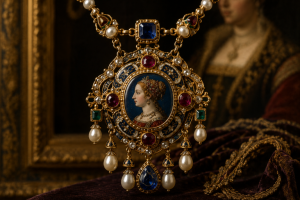
During the Renaissance, artists such as Michelangelo and Raphael received some of their most prestigious commissions to create works for churches and papal patrons. Sculptors devoted years to cathedrals and monuments, while rulers commissioned jewels not merely to display wealth, but to embody divine authority, dynastic continuity, and personal meaning. Precious objects carried emotional, symbolic, and spiritual weight.
The jewel itself was often the most valuable object in a royal collection because it fused rarity, craftsmanship, memory, and power into a single work.
Across cultures, these works became symbols of spirituality, power, fertility, ancestry, and even the mysteries people could not yet explain.
These objects became more than accessories. They became cultural artifacts that seemed to carry a story of their own.
The Evolution of Fine Jewelry
Over time, societies changed. Agriculture transformed civilization. Kingdoms expanded.
As trade expanded through routes such as the Silk Road (beginning around the 2nd century BCE), gemstones, precious metals, artistic techniques, and cultural motifs traveled between Asia, the Middle East, Africa, and Europe. Egyptian forms inspired later civilizations, while the Renaissance’s rediscovery of Roman antiquity revived classical jewelry motifs across Europe. Entire periods of jewelry history emerged from this exchange of cultures and ideas.
By the late 18th and 19th centuries, the Industrial Revolution transformed nearly every aspect of society.
As railroads expanded and cities grew, people became increasingly disconnected from the small communal structures that once defined identity. Urbanization created anonymity. New wealth emerged rapidly through commerce, manufacturing, and entrepreneurship rather than inherited land and aristocracy.
For many newly wealthy families, financial success arrived faster than cultural inheritance.
Previous aristocratic generations had often grown up surrounded by collectors, patrons, artists, architecture, music, and decorative arts. Taste was absorbed gradually through environment and tradition. But industrial wealth created an entirely new class of consumers who knew how to build fortunes, yet were often still learning how to navigate the world of art and collecting.
The Emergence of Fine Jewelry Brands
The Industrial Revolution reshaped more than society. It also transformed the way products were created, marketed, and understood. Advertising became a powerful force in commerce.
A “brand” became a promise of consistency. Consistency became profitable because it allowed products to be reproduced, scaled, marketed, and recognized instantly by larger audiences.
This model works extraordinarily well for mass consumption. It made beautiful objects more accessible and allowed larger audiences to participate in experiences that were once reserved for a select few.
With consistency, most people know what to expect from a familiar restaurant, a favorite soup, or a recognizable luxury brand. The experience feels safe, familiar, and socially understood.
By design, branding often aims for broad appeal. It creates recognition, trust, and consistency across a larger audience.
Art does something different. Rather than optimizing for repetition, it often pursues discovery.
The Changing Role of the Jeweler
As commercial jewelry houses expanded during the late 19th and 20th centuries, much of fine jewelry gradually shifted away from individualized artistic expression and toward scalable luxury.
Advertising campaigns required recognizable styles. Collections had to be reproduced. Stones had to be sourced in repeatable quantities. Designs needed broad appeal.
In many commercial collections:
- The rare gemstone became the centerpiece.
- Designs increasingly followed recognizable styles that could be reproduced across collections.
- Personalized symbolism and tailored artistic expression became less central.
The result was a new category of jewelry that was luxurious, refined, and increasingly recognized through its brands.
Meanwhile, art jewelry continued along a more exclusive path, carried forward by collectors, patrons, and artists devoted to rarity, meaning, and artistic expression.
Today, much of the jewelry world is still recognized primarily through branding. Yet the desire for meaning, originality, and artistic expression has never disappeared.
Throughout every era, artists have continued to approach jewelry differently. Rather than beginning with a market or a collection, they begin with an idea. Their work carries forward the older tradition in which artistic vision shapes the jewel, rather than the reverse.
This is where the world of Crevoshay begins
Paula Crevoshay’s work is rooted in discovery, individuality, and the belief that art has the power to connect us through shared experiences of beauty, wonder, meaning, and human expression.
Each jewel is conceived as a one-of-a-kind work that could not exist in exactly the same way again.
Each composition begins as an artistic exploration of color relationships.
Often described as the “Queen of Color,” Paula approaches gemstones much like a painter approaches a palette. Harmony, contrast, and the emotional resonance of color frequently guide the earliest stages of the creative process.
Rare gemstones are selected for their beauty, character, rarity, and ability to contribute to the artistic vision behind a work. This freedom allows Paula to choose the most extraordinary expression of a gemstone, based on its artistic potential rather than its ability to fit a predetermined formula.
Only then do the artistic elements begin to take shape: light and movement, narrative and symbolism, cultural references, natural forms, unexpected juxtapositions, and the emotional energy of the materials themselves. Every decision contributes to a unified artistic vision. The gemstones matter immensely, but they remain in service to the artwork rather than the other way around.
That distinction lies at the heart of her work.

For much of history, aristocrats and collectors acquired extraordinary materials specifically so artists could elevate them into something meaningful and enduring. The jewel was not merely a display of resources. It became a vessel for identity, memory, intellect, emotion, and legacy.
In this sense, the future of art jewelry may lie in remembering what jewelry has always been at its most meaningful: an artistic expression of beauty, meaning, and a shared human experience.
Continue the Journey
If you enjoyed exploring the history, philosophy, and artistry behind fine jewelry, we invite you to continue the conversation through The Collector’s Letter. Each edition explores the stories, inspirations, and extraordinary works that continue to shape the Crevoshay Studio.
Subscribe to The Collector’s Letter below.